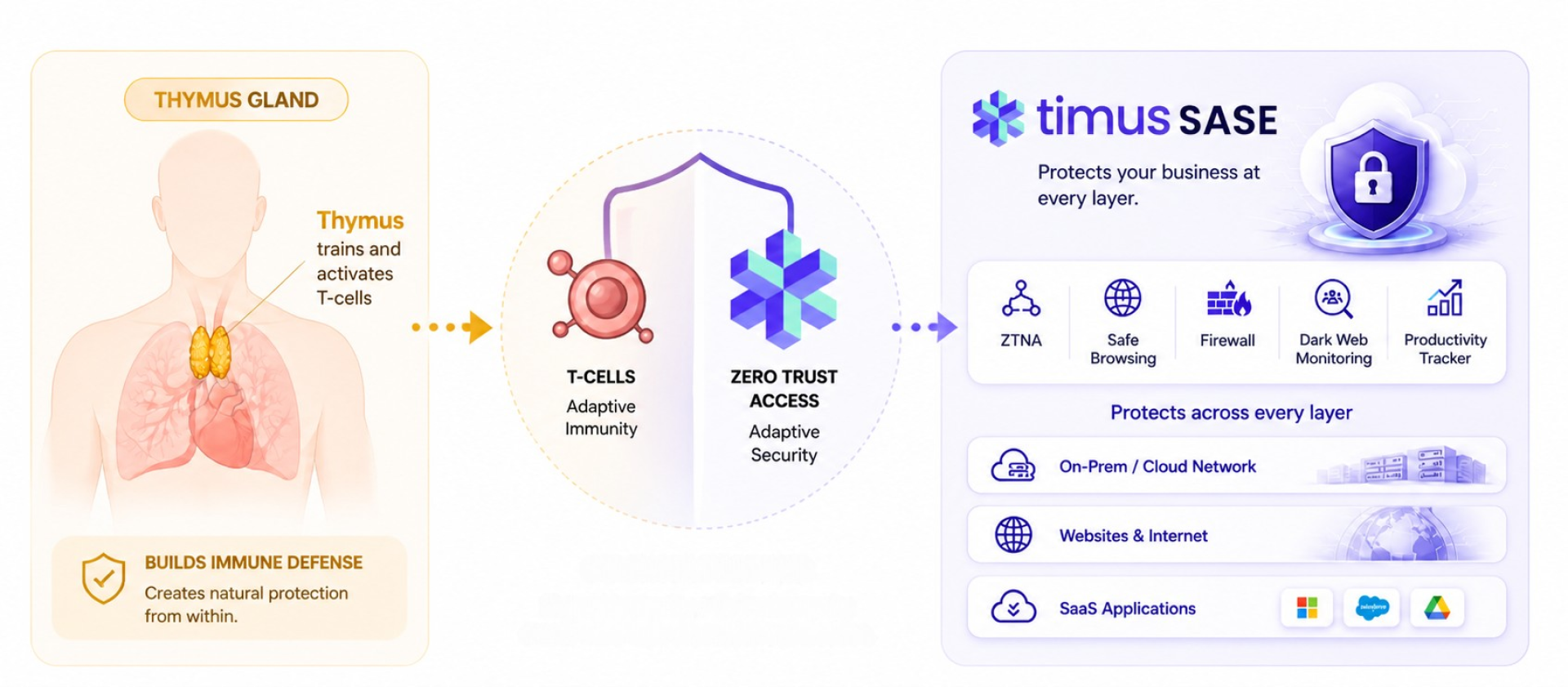



Why SASE for MSPs Is Replacing Legacy VPN Architectures
Traditional VPN architectures extend network-level access after authentication, creating implicit trust zones that attackers can exploit for lateral movement. In contrast, SASE for MSPs enforces identity-aware, application-specific access with continuous posture validation throughout the session, not just at login. By eliminating flat network exposure and consolidating remote access security, traffic inspection, and policy enforcement into a unified model, SASE reduces the attack surface across multi-tenant environments while improving control and auditability.
How SASE Could Have Prevented Common MSP Breach Mistakes
Managed Service Providers sit at a unique intersection of risk and responsibility. Remote access, shared tools, privileged accounts, and hybrid environments create a level of interconnected exposure that attacker sincreasingly understand and actively target.
Recent incidents across the MSP ecosystem reveal a clear pattern: breaches rarely originate within the MSP itself.
They often start when attackers exploit remote access pathways, inconsistent tenant configurations, or legacy VPN tunnels and then use those pathways to pivot directly into client environments.
For MSPs modernizing their access architecture, Zero Trust Secure Access offers a practical way to eliminate these weak points by enforcing continuous validation, application-level segmentation, and unified policy control.
The Modern Reality: MSP Access Is the Attack Surface
Industry reporting continues to confirm this trend:
- RDP and VPN remain two of the most commonly exploited entry points for ransomware, according to CISA and FBI IC3 advisories.
- A substantial portion of breaches involve a third-party access path, including MSP toolsets, remote credentials, or privileged accounts (Verizon DBIR).
- SMBs experienced a measurable increase in compromises triggered through remote access tools, reflected in multiple MSP threat analyses (CompTIA + ConnectWise).
- Recovery costs continue to rise, driven in part by credential compromise and lateral movement in hybrid environments (Coveware).
The conclusion across sources is consistent. Client environments are the true objectives, and MSP access pathways are the most efficient route in.
A Timus SASE architecture mitigates this exposure by removing persistent trust, segmenting access, and continuously evaluating behavior, risk level, and device posture to enforce dynamic zero-trust access across every connection, from the moment they sign in through the entire session.
Common Indicators of Elevated Breach Risk in MSP Environments
Across multi-tenant incident response, several operational patterns appear repeatedly:
- Continued use of VPN tunnels or exposed RDP services
- Fragmented toolsets with inconsistent telemetry
- Credential reuse or inconsistent MFA enforcement
- Technician accounts with broad, persistent access
- Divergent security controls across tenants
- Hybrid endpoints with inconsistent management coverage
These issues reflect architectural misalignment with current attacker behavior, not a lack of effort.
Where SASE Adds Practical Value for MSP Operations
SASE consolidates access control, threat inspection, and policy enforcement into a centrally managed model designed for distributed work.
Key components relevant to MSP workflows include:
- Adaptive Zero Trust Access: continuous identity, risk, posture, and behavior validation at sign-in and throughout the active session, enforcing segmented access that adjusts dynamically as risk changes.
- Secure Web Gateway: outbound filtering and behavioral inspection
- Firewall-as-a-Service: Centralized traffic inspection and enforcement
- Unified multi-tenant console: consistent policy structure and visibility across clients
- Centralized policy governance across distributed environments
As Jim Smith, CEO of Propersky, one Timus MSP partner shared during a recent breach remediation:
“We didn’t have this at the most recent breach that I worked at, and it would have been a game changer, because they had a huge mobile remote workforce, and nobody was really sure of who was safe with what.”
This model removes exposed services, prevents lateral movement, and standardizes access controls across diverse environments.
Eight MSP Breach Mistakes That SASE Could Have Prevented
| Common MSP Breach Mistake | How IT Typically Happens | How SASE Prevents It |
|---|---|---|
| 1. Exposed RDP or VPN entry points | Open RDP ports and legacy VPN tunnels become easy targets for brute-force attacks or credential stuffing. | Adaptive Zero Trust reduces reliance on legacy VPN tunnels. No application access is granted through broad implicit trust. Access is granted based on identity, device posture, and context, reducing the external attack surface. |
| 2. Limited cross-client visibility | Fragmented tools and inconsistent logging prevent MSPs from seeing lateral movement or suspicious traffic early. | SASE provides centralized, multi-tenant visibility and unified logging. Traffic, access attempts, and anomalies can be monitored in real time across all clients. |
| 3. Weak or reused credentials | Technicians, vendors, or end users reuse passwords; MFA may be inconsistent. | Identity-aware access and enforced MFA at the network edge prevent compromised credentials from being used to move deeper into the environment. |
| 4. Overprivileged technician access | “Allow-all” VPN access or full network access for convenience gives attackers wide internal reach if a device is compromised. | Role-based and app-level segmentation ensure each identity can reach only what it needs, nothing more. Limits the blast radius if a device is compromised. |
| 5. Insecure third-party tools (RMM, backup, remote support) | Attackers compromise a tool and use it as a pivot to deploy malware or move laterally. | SASE isolates tool traffic using least-privilege policies. Network segmentation prevents compromised tools from reaching unrelated systems. |
| 6. Inconsistent security policies across clients | Each client has different rules, MFA enforcement, and access models, creating gaps that attackers exploit. | SASE standardizes access and security policies across all tenants, with centralized control and tenant-level exceptions where needed. |
| 7. No real-time threat or posture monitoring | Periodic scans miss fast-moving threats; MSPs find | Continuous visibility into traffic, behavior, and DNS activity helps surface suspicious activity earlier and supports faster containment. |
| 8. Reactive actions instead of proactive prevention | MSPs discover the breach after encryption or data exfiltration has already begun. | SASE enforces authentication, segmentation, and threat filtering before access is granted, reducing opportunities for attackers to move or escalate. |
If you’re evaluating whether your current access model would survive one of these scenarios, compare it against a live Timus environment.
Operational and Business Impact for MSPs
Operational Advantages
- Standardized onboarding across clients
- Fewer access-related support tickets
- Unified security posture across hybrid environments
- Cleaner, more predictable incident response
Business Advantages
- Stronger client confidence
- Improved insurance and audit posture
- Reduced multi-tenant exposure
- Differentiated, modern security service delivery
Why MSPs Standardize on SASE for Daily Operations
Modern SASE architecture gives MSPs a practical way to enforce consistent access controls, reduce lateral movement, and gain unified visibility across diverse client environments. Consolidating access, threat inspection, and policy structure under a single model removes the fragility of VPNs and scattered tools.
As Jim noted during a recent discussion, “You guys actually really get security, and the incremental improvements we see release after release just make the product better, better, better. I don’t think anybody understands the SASE MSP space as well as you do.”
Timus provides SASE designed specifically for MSP operations:
- Integrated ZTNA and web security controls with lightweight endpoint connectivity
- Continuous posture and identity validation
- Multi-tenant, role-segmented management
- Traffic isolation that prevents lateral movement
- Reduced reliance on exposed ports and legacy VPN tunnels
- Automated enforcement and policy-based containment
This model replaces the legacy access pathways most commonly exploited in MSP-managed environments.
Conclusion
Modern attack patterns increasingly target MSP accessible environments, exploiting legacy trust assumptions and inconsistent hybrid access pathways. SASE offers a cohesive, enforceable architecture that eliminates these weaknesses, enabling MSPs to prevent lateral movement, contain compromised devices, and maintain consistent controls across client environments.
For MSPs supporting distributed workforces, compliance-sensitive industries, and multi-tenant operations, SASE represents a foundational architectural shift, not a future consideration.
FAQ
Why do breaches escalate so quickly once attackers get inside?
Once inside a flat network or broad VPN tunnel, attackers can move laterally with very little resistance. Many environments still rely on implicit internal trust, which allows compromised credentials or devices to access far more than they should. Without segmentation and continuous verification, containment becomes reactive instead of controlled.
What makes the first hour after a breach the most critical?
The first hour determines containment. If access can be isolated immediately, damage stays limited. If not, threats spread across users, devices, and cloud apps. MSPs need real-time visibility into session activity and device posture to answer the key questions insurers and legal teams ask right away.
Why are exposed RDP and legacy VPNs still the biggest starting points?
MSP Partners repeatedly sees breaches originate from a forgotten remote desktop port, an old Exchange server unintentionally exposed, or a VPN tunnel left open for convenience. Attackers automate scans for these exact weaknesses across SMB networks.
How does SASE improve breach containment for MSPs?
SASE enforces identity-based, application-level access instead of full network exposure. With continuous Zero Trust validation, access can be adjusted or terminated mid-session if risk changes. That limits lateral movement and reduces the blast radius of a compromised device.
What visibility gaps slow breach response?
Many MSP environments rely on disconnected tools for VPN, firewall, and web filtering. That fragmentation makes it difficult to see who accessed what, from where, and in what device state. Unified logging and centralized policy visibility allow faster investigation and clearer client communication.
Which tools become essential after a breach?
MSPs listed three non-negotiables:1.
- EDR (often mandated by cyber insurance)
- 24/7 SOC monitoring for rapid detection because no one can watch logs around the clock
- Zero Trust access controls to isolate devices while restoring operations
Is SASE the same as Zero Trust?
Not exactly. Zero Trust is a security principle that requires continuous verification of identity and device posture. SASE is the cloud-based architecture that delivers Zero Trust enforcement along with secure web gateway and firewall capabilities. In practice, modern SASE platforms like Timus operationalize Continuous Zero Trust for MSP environments.
How does Zero Trust (inside SASE) help MSPs stabilize hybrid and remote environments?
When an MSP needs to shut everything down except one clean SaaS app, ZTNA allows exactly that. MSPs described wishing he had this during a recent breach where remote workers were unknowingly carrying infected devices.
Why is honesty and transparency a recurring theme during breach remediation?
MSPs highlighted that the biggest mistake they make is not being upfront about misconfigurations or oversights. Transparency accelerates the recovery plan, aligns all teams, and keeps the client calm during “the most traumatic 48 hours” of their business life. Breaches often expose outdated access models and inconsistent policies. MSPs who modernize toward segmented, continuously verified access typically reduce operational friction and strengthen client trust long-term.
How does SASE reduce operational stress for MSPs during a breach?
Unified traffic logs, consistent access policies, and application segmentation make it easier for MSPs to answer the critical questions that insurers and attorneys ask immediately:
- What was impacted?
- Which devices communicated externally?
- How far did the threat move?
Clear answers reduce escalation pressure and shorten investigation timelines.



 Tie-mus (like “time-us,” but sharper)