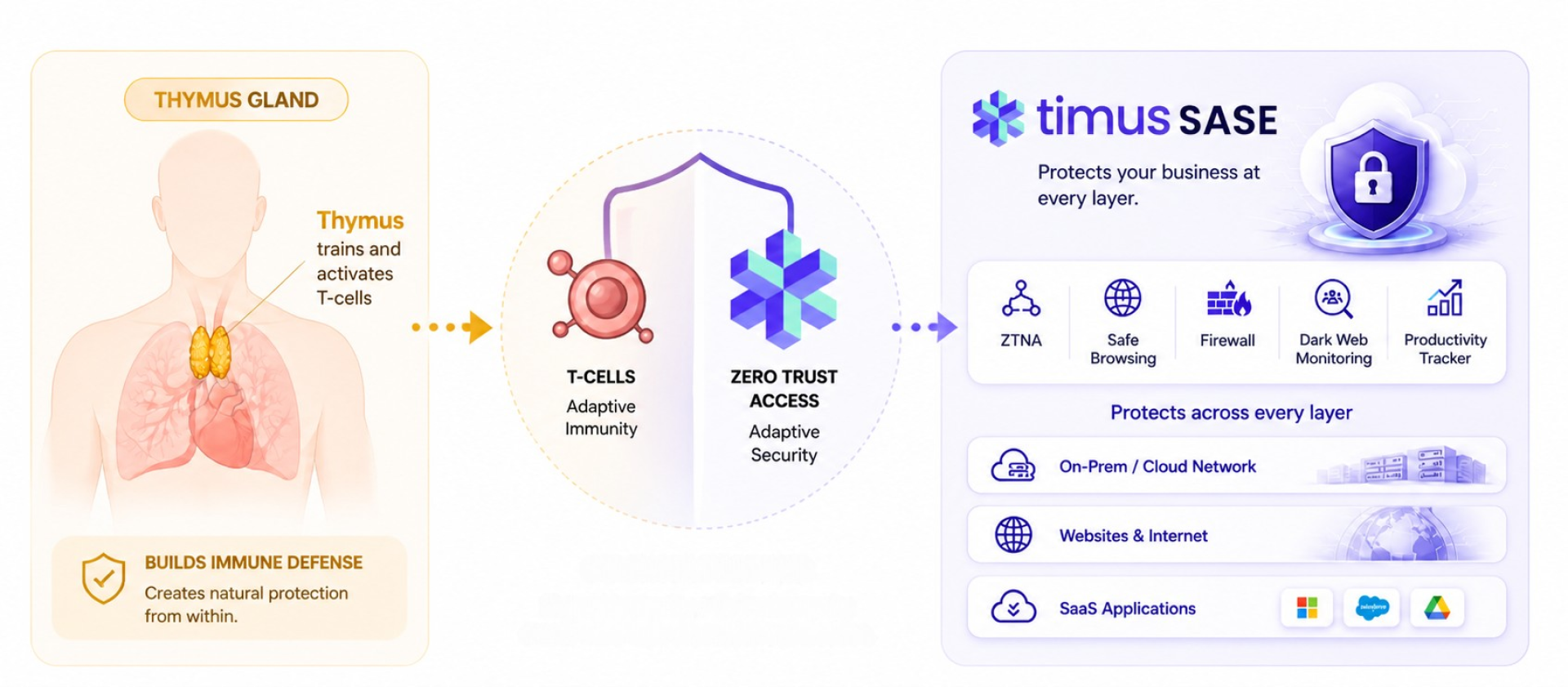



Why static trust fails and how access must adapt throughout session
Cyberattacks move faster than ever while operations often rely on after-the fact response. Yet many MSPs are still operating in a reactive mode, responding to alerts, tickets, and incidents after damage has already begun. If clients rely on you to protect their environments, response alone is no longer an efficient security strategy.
What MSPs need today is a continuous cyber protection strategy. One that reduces risk proactively, adapts automatically, and protects hybrid environments without depending on perfect user behavior or constant manual intervention.
This blog explores how MSPs move from reactive security to continuous protection by shifting the architecture behind access, control, and visibility. Frameworks like Zero Trust Network Access and SASE are central to that shift.
The Problem: Security Is Still Reactive by Design
Most MSPs do not lack tools. They lack visibility, consistency, and the ability to stay ahead of risk. That gap shows up in familiar ways:
A client experiences ransomware overnight, and your team scrambles to isolate endpoints remotely.
A remote employee logs in from an unmanaged device, and the issue is discovered only after an alert fires.
Help desks spend large portions of their week on repetitive, preventable tickets: VPN failures, MFA lockouts, password resets, access issues. Patch cycles lag because teams are stretched thin and maintenance windows get pushed.
Reactive cybersecurity emerges when MSPs:
- Rely on perimeter assumptions
- Trust isolated alerts instead of end-to-end context
- Treat risk only after it shows up as an incident
- Depend on users to behave correctly
- Lack a unified strategy for access and enforcement
Attackers rarely operate on tickets or SLAs. They operate on speed, automation, and silence.
A model built around reaction will always be late.
Why This Matters for MSPs
Every gap affects more than a client environment. It affects trust, margins, and the ability to scale. MSPs face pressure from multiple directions:
- SMBs remain primary targets because they lack in-house security teams.
- Compliance expectations continue to evolve across NIST, CIS, HIPAA, PCIDSS, and similar frameworks.
- Unplanned incident response drains margins and disrupts service delivery.
- Client churn increases sharply after breaches that impact operations.
Most importantly, MSPs are increasingly expected to provide a cyber protection
strategy, not just a collection of tools.
That expectation requires MSPs to:
- Deliver continuous monitoring
- Enforce predictable controls
- Provide outcome-based protection rather than device-only coverage
- Explain risk reduction through a clear roadmap
This is where proactive cyber protection becomes operationally necessary.
What Continuous Protection Actually Means
A continuous protection strategy is not a larger stack of tools or a higher volume of alerts. It is an architectural model where access, visibility, and enforcement operate continuously, without waiting for human intervention. The critical shift is this:
Security does not end after authentication. It continues during the session. A helpful way to think about it comes from an MSP leader’s analogy.
Traditional security can work like airport screening. You clear the checkpoint, then the system assumes you remain safe. However, not carrying metal through a security checkpoint does not mean a person cannot cause harm in other ways. If a threat passes the gate, the rest of the journey may be exposed after too.
Continuous protection is like having a guard watching context throughout the journey. The system stays quiet until risk changes, then it responds immediately. If something becomes suspicious mid-session, access is restricted or stopped.
That is the practical difference between static checks and adaptive protection.
-
Replace Perimeter Assumptions With Identity and Context
Many breaches still begin with compromised credentials. Traditional firewalls and VPNs, by design, cannot reliably distinguish between a legitimate user and an attacker using valid credentials once access is granted.
Zero Trust changes the model by enforcing:
- Continuous verification of identity, device, and session context
- Least privilege access based on role and need
- Device posture checks before access is allowed and continuous posture validation during the session
- Policy decisions that adapt dynamically to risk
This matters because modern attacks assume credentials will be compromised. Identity-based protection limits blast radius by design, even when users make mistakes.
-
Start With the Real Problem: Humans and Workflow
MSPs do not fail because they do not care about security. They fail because human workflows create predictable outcomes. A real-world example shared by an MSP director of operations illustrates this clearly.
Doctors often work outside business hours. They need access at midnight. Traditional VPNs fail frequently. When they fail, the consequences are not theoretical.
Passwords get forgotten.
Then passwords get written down.
Sometimes in a text file on the desktop called VPN password.
At that point, one compromised endpoint can put the entire environment at risk.
Most MSPs respond by adding more friction: MFA prompts, more steps, more resets, more tickets. That increases tension at the worst possible time.
Continuous protection changes the workflow. Instead of relying on users to do the right thing every time, the system enforces qualification checks automatically.
-
Enforce Qualification Checks Before and During Access
The webinar reinforced a practical model that MSPs find valuable.
Before access is allowed, the system can verify required conditions:
- Antivirus is running
- EDR is running
- RMM is running
- Backup agent is running
- Disk encryption is enabled
- OS posture is acceptable
Then the system keeps checking during the session.
If someone disables a required protection service mid-session, access can be automatically restricted as soon as the posture change is detected.
This is where continuous protection becomes real. It is not a security promise. It is a mechanical behavior.
-
Use Context-Based Rules to Reduce Friction Without Reducing Safety
One of the strongest points from the MSP conversation is that security is always balancing two opposing forces.
Secure systems tend to be harder to use.
Easy systems tend to be easier to attack.
The practical solution is context-aware policy.
For example:
- If a user is at a known home IP, reduce unnecessary prompts.
- If the user is traveling, require stronger verification.
- If the user is on public WiFi, enforce stricter rules.
- If travel appears impossible, access should stop until confirmed.
This is not about trusting or not trusting users. It is about responding to context as it changes.
-
Move From Disconnected Tools to a Unified Protection Architecture
Many MSPs manage multiple point solutions that operate independently. Gaps between tools become blind spots.
A unified SASE-based architecture provides:
- Shared visibility across identity, access, and traffic
- Centralized policy management with consistent enforcement across environments
A unified stack is not about fewer vendors.
It is about eliminating blind spots between identity, access, and behavior.
-
Reduce Attack Surface by Controlling Where Sensitive SaaS Can Be Accessed
Another highly practical takeaway from the webinar is how MSPs think about attack surface. If you have one door, you can make that door extremely hard to get through. For many MSPs, the most sensitive doors are SaaS systems: RMM, PSA, documentation platforms, identity portals.
A common strategy is to restrict access behind a known static IP requirement. Many MSPs want this but struggle with dynamic home IP addresses and operational complexity.
Continuous access platforms allow a simple principle:
Access to high-risk SaaS can be allowed only if the device is part of the trusted access boundary enforced by policy and meets defined posture requirements. That reduces the usefulness of stolen credentials and reduces exposure from internet-facing login panels.
-
Automation Is Not Just Speed. It Is Removing Human Dependency
Automation is not about responding faster. It is about removing the need for humans to notice, decide, and act for routine risk events. Automation allows MSPs to:
- Block risky signals that indicate suspicious activity
- Restrict access when device posture changes
- Trigger MFA when behavior shifts
- Isolate suspicious activity automatically
- Open tickets when conditions fail
This reduces noise and allows skilled technicians to focus on higher-value work instead of repetitive access troubleshooting.
-
The Most Underrated Outcome: Quality of Life
The webinar made a point that MSPs often say quietly but feel deeply.
Traditional access methods create bad quality of life.
End users do not want extra steps. They want seamlessness.
Admins do not want to spend their best talent teaching basic VPN sign-in workflows or taking midnight calls when access fails.
When access becomes policy-driven and continuously evaluated, the work changes:
- Less time spent fixing access
- More time spent reviewing posture signals, investigating session-level events, and making improvements
- More consistency across clients
- Less frustration for both users and engineers
Proactive protection becomes a practical operating model.
The MSP Roadmap to Continuous Protection
Reactive security is no longer sufficient. Continuous protection begins with visibility and control.
Identity-first access and real-time qualification checks protect users across changing environments.
Zero Trust and SASE provide the architectural foundation. They unify protection and connectivity under a consistent model.
Automation becomes the silent system operator. It reduces noise and enables scale. Clear roadmaps build trust.
When MSPs can explain how protection works continuously, client relationships deepen.
Final Thoughts
A continuous protection strategy is not about chasing alerts faster.
It is about designing systems that protect by default.
Security should not depend on whether someone remembered to log in.
It should not depend on whether someone saved a password in a text file.
It should not depend on whether a technician is awake at midnight.
It should depend on continuously enforced rules, verified posture, and context aware access.
That is the shift MSPs are making right now.
FAQs
1. What does continuous cyber protection mean for MSPs?
Protection that operates continuously through identity-based access, posture qualification, and adaptive enforcement rather than reacting after incidents occur.
2. How is cyber protection different from cybersecurity?
Cybersecurity is broad. Cyber protection focuses on continuous reduction of risk through real-time verification and enforcement.
3. How can MSPs begin building a continuous protection roadmap?
Start with risk assessment, adopt Zero Trust principles, implement SASE-based control for distributed users, and automate enforcement workflows.
4. Why move away from reactive models?
Reactive models increase operational cost, miss early warning signals, and reduce client confidence.
5. How do Zero Trust and SASE support continuous protection?
They continuously evaluate identity, device posture, and session context, enabling always-on protection across environments.



 Tie-mus (like “time-us,” but sharper)